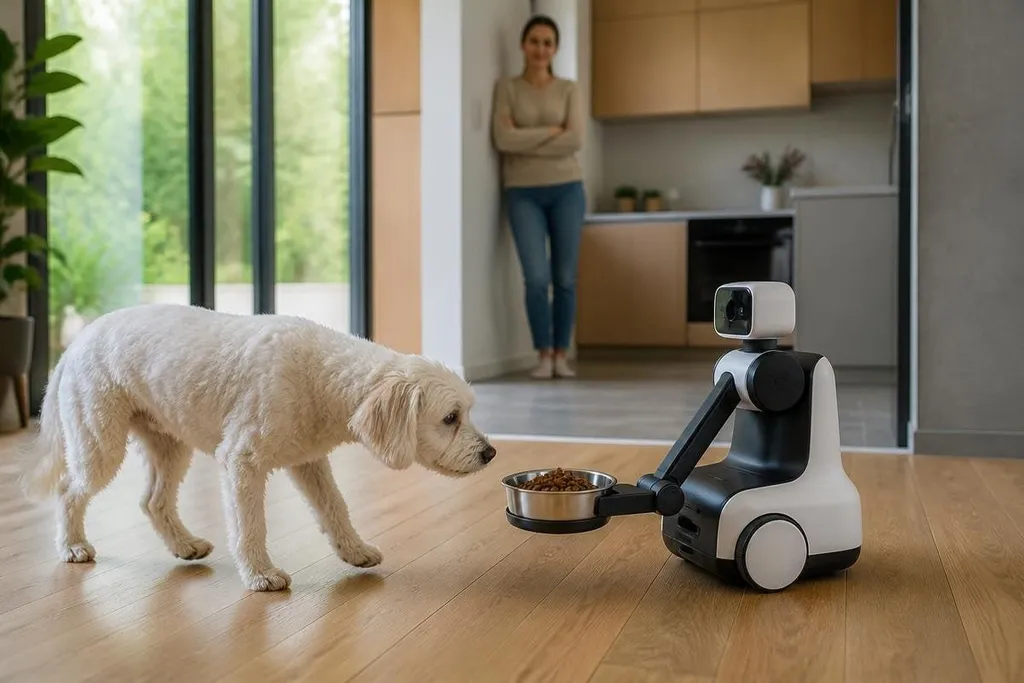
A home robot could refill a water bowl, carry food, or alert you when a pet leaves a safe area. Caring for an animal involves more than moving objects, though. A robot must read a changing home, avoid harming the pet, and know when a person needs to take over.
- Food and water tasks are easier to automate than play, grooming, or medical care.
- Cameras and sensors can spot some changes, but they don't replace a vet or a pet owner.
- The safest home robot would support a care routine rather than run it alone.
The tasks a robot could handle
Pet care has a useful dividing line. A robot can repeat a fixed action in a known place more easily than it can respond to an animal's changing behavior.
A feeding system could release a measured portion at a set time. A mobile robot could carry a bowl or check whether water remains. A connected camera could send a notice when a dog enters a room, a cat climbs onto furniture, or a pet stays in one place for longer than expected.
Those jobs still need careful design. A dog may knock over a bowl. A cat may block a sensor. Another pet could eat the food meant for a different animal. The robot needs a way to confirm what happened, then send the owner a clear message when the routine fails.
Cleaning presents a harder case. A floor robot can pick up some loose hair and dirt, yet it may spread wet food, move a toy under furniture, or stop after meeting an object it can't identify.
Pet waste creates a separate safety problem. A robot that touches it needs a reliable way to detect, collect, and store it without spreading material through the home.
Where animal behavior changes the problem
Pets don't follow a fixed script. A dog may approach a moving machine one day and avoid it the next. A cat may treat a robot as a toy, block its path, or pull at a cable. A frightened animal can run into a doorway or under furniture when the robot starts moving.
This makes sensing and motion control central to the design. The robot needs cameras or other sensors to locate the pet, slow down near it, and keep its moving parts away from paws, tails, collars, and food bowls. It also needs a safe stop that a person can trigger from nearby or through an app.
Health decisions need clear boundaries. A robot could record a video, note that a bowl has not moved, or send a sound from the room. It shouldn't decide that a pet is sick from one unusual posture. Pain, dehydration, poisoning, and breathing trouble need a person and, when required, a veterinarian.
A pet robot’s useful role starts with a clear record of what it sensed, what it did, and when the owner had to step in. Robot24.com reporting on home robots can put those details beside the maker’s claims before an owner decides what care belongs with a machine.
The role of the owner
Pet care also includes judgment that is hard to turn into a rule. An owner knows how much a pet normally eats, how it walks, which sounds mean trouble, and which objects must stay out of reach. A robot can collect signals, but the owner still needs to interpret them.
That changes the best use of this technology. For an owner, the machine could reduce repeated work and give better information during a workday or a short trip. It should keep the owner involved when the task affects feeding, movement, medication, injury, or stress.
I'd use a home robot as a second set of eyes and hands, never as the sole carer for an animal.
A practical check before you buy
Use these questions to judge any pet-care robot or home robot feature:
- Task limits: Does it handle food, water, cleaning, or alerts, and where does the owner take over?
- Pet safety: What happens when the animal blocks the robot, bites a cable, or knocks over an object?
- Failure alerts: Does the system report a missed action, an empty supply, a blocked path, or a lost connection?
- Human control: Can you stop the robot quickly, change a task, and check live video when needed?
- Privacy: Where do camera recordings go, how long are they stored, and who can view them?
- Backup plan: What happens during a power cut, network failure, motor fault, or missed notification?
A robot that passes those checks may help with routine care. It still needs clean supplies, safe floor space, regular checks, and a person who responds when the system reports a problem.
Home robots can take on pieces of pet care as their sensors, grippers, and software improve. The useful measure is simple: can the machine complete one defined task safely, report failure clearly, and leave the animal better cared for than before?